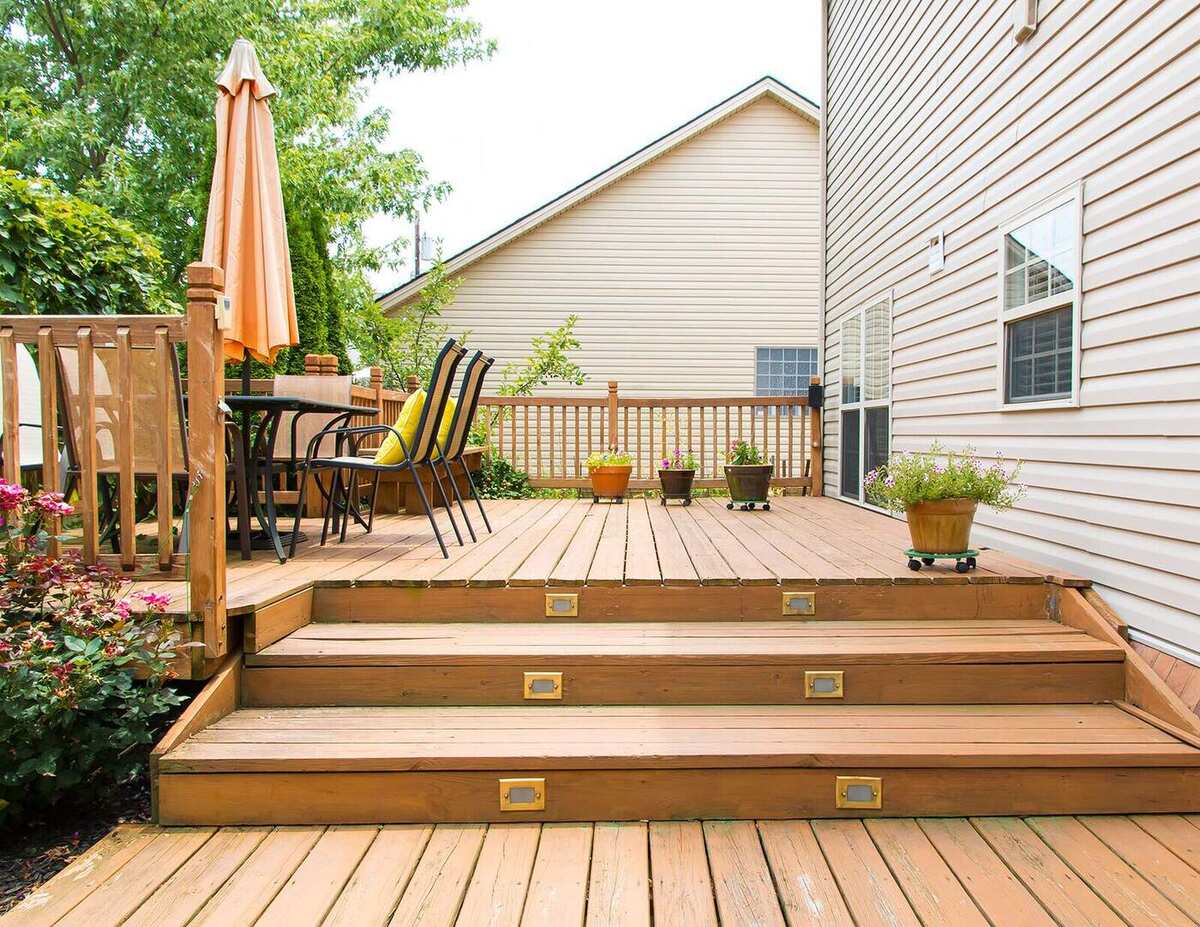
Outdoor Living
Deck Installation & Repair
Monty's builds new wood and composite decks, replaces decks that have worn out, and repairs boards, railings and stairs. Every job starts with a free walkthrough, so you know whether your deck needs a repair or a rebuild before you spend a dollar.
What's included
- New deck installation
- Deck replacement
- Composite deck installation
- Deck board replacement and repair
- Railings and stairs
- Footings, posts and framing
What's not included
- Painting or staining
- Lighting or outlet wiring
- Hot tub electrical or plumbing
What does deck installation with Monty's include?
Deck installation with Monty's covers the whole build: footings and posts, framing, decking boards, railings and stairs, in wood or composite. We build new decks, replace decks that have reached the end of their life, and repair the parts that wear out first.
Every project starts with a free walkthrough. We look at how the deck will be used, how it connects to the house, the height off the ground, the slope of the yard and, on a replacement, the condition of the existing frame. From there you get a written, line-item quote that spells out the size, the material and whether the job needs a permit. On build days our team sets the footings and posts, frames the joists, installs the decking, and finishes with railings and stairs. If you want lights, outlets or a hot tub hookup on the new deck, that work needs a licensed electrician or plumber, and we can recommend one.
Wood or composite: which deck material is better?
Choose wood if you want the lowest upfront cost and a natural look, and choose composite if you want a deck that needs far less maintenance over the years. Monty's installs both.
Pressure-treated wood is the most affordable decking and the most common, and cedar costs more but resists rot and looks warmer. Both need regular cleaning and sealing to keep boards from cracking, splintering or graying in sun and rain. Composite decking costs more to buy and install, but it doesn't need sealing or staining and holds its color, which is why many homeowners choose it for decks in full sun or by a pool. Composite does need the right joist spacing and hidden fasteners, so it's worth having it installed by a crew that knows the product. Many decks combine both: a pressure-treated frame, which no one sees, under composite boards and railings.
Should I repair or replace my deck?
Repair your deck when the problem is on the surface, such as loose, cracked or rotted boards, wobbly railings or worn stairs. Replace it when the frame underneath is failing or doesn't meet current code.
Replacing deck boards on a sound frame is handyman work, and it's often the most cost-effective way to make an older deck safe and good-looking again. The deciding factor is the substructure. If the ledger board is nailed to the house instead of bolted, the posts sit directly on dirt, or the joists are soft or sagging, new boards won't fix the problem, and the deck needs to be rebuilt to current code. That rebuild is a permitted job, with a properly flashed ledger, joist hangers and code-height guardrails. At the walkthrough we check the frame, not just the boards, and tell you plainly which one your deck needs, so you don't pay for a rebuild you don't need or put new boards on a frame that's failing.
What does deck repair include?
Deck repair with Monty's covers the parts of a deck that wear out: decking boards, railings, balusters, stair treads and stringers, and loose or popped fasteners. Most deck repairs take four to eight hours on site.
A typical repair visit replaces cracked, cupped or rotted boards with matching new ones, tightens or replaces wobbly railings and balusters, and fixes stairs that have loosened or started to rot at the bottom. We also re-secure boards that have lifted and replace rusted fasteners, which are a common cause of boards working loose. On an elevated deck, we check the posts, beams and the connection to the house while we're there, since those are the parts that matter most for safety. If we find a problem in the frame, we'll show you and explain the options before doing any more work. Repairs are also a good time to plan a future replacement, so you can budget for it instead of being surprised by it.
Do I need a permit to build a deck?
Usually, yes, for a new deck or a full replacement, and usually no for replacing boards on an existing frame. Rules vary by city, so Monty's confirms the requirements at the estimate and pulls and manages the permit when one is needed.
Building departments care most about the structure: footings, posts, beams, the ledger connection to the house and the height of the railings. That's why a new deck, a deck rebuilt to current code, or a deck that changes size or height typically needs a permit, while swapping out decking boards or fixing a railing typically doesn't. Many HOAs also want to approve exterior work like decks before it starts, which can add a few weeks to the schedule, so it's worth asking early. When a permit is required, we build to the approved plans and schedule the inspections, so the work is signed off before the job is done.
What it costs
$400 – $1,500 for deck repairs
Typical range for repairs such as board replacement on a medium deck, from the Monty's cost estimator; small decks cost less and elevated or multi-level decks can run higher. New decks and deck replacements are quoted per project after a free walkthrough, with a written, line-item quote.
Our Locations
Find Monty's Near You
Every Monty's is locally owned and run by people who live in the communities they serve. Pick your area to meet your local team.
Idaho
North Carolina
Tennessee
Texas